

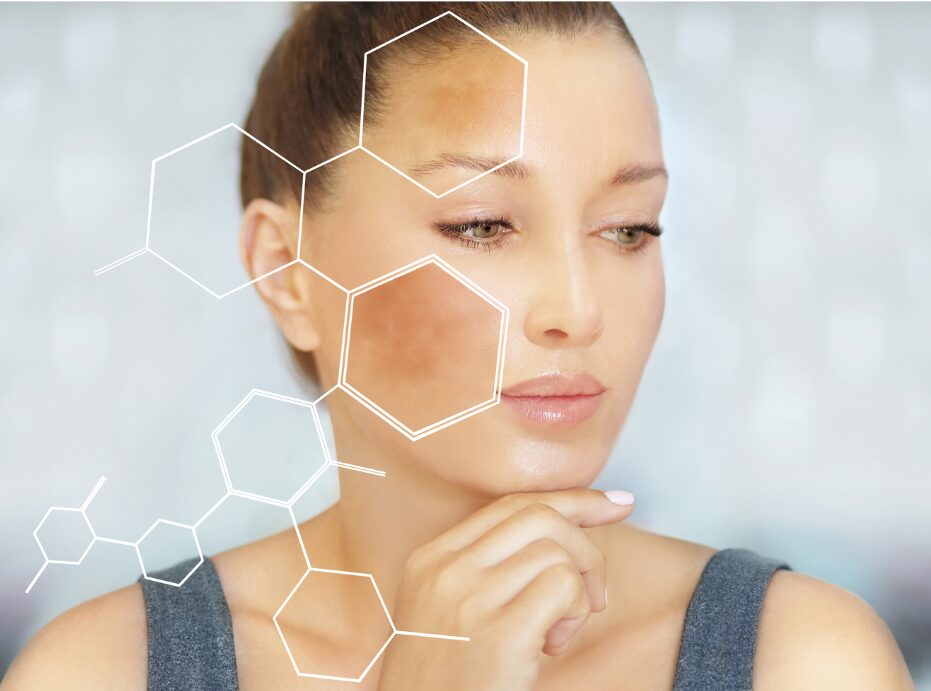
What is Hyperpigmentation?
Hyperpigmentation is an overproduction of melanin, the pigment that gives skin its colour. When certain areas of the body produce too much melanin, dark patches or spots appear. There are differing degrees of hyperpigmentation depending on the cause:
- Sun spots, which are called age spots or solar lentigines, are brown patches developed over a period of years. Usually this is from sun exposure and often found on the face, hands or chest.
- Freckles are small specks. They are genetic and darken in the sun.
- Melasma is hormonal pigmentation that classically looks like symmetrical brownish patches on the face. It can be related to pregnancy or oral contraceptive use.
- Post-inflammatory hyperpigmentation is the name of the marks left behind after acne, eczema, or anything that injures the skin. This type of hyperpigmentation can be seen most in people of deeper skin tones. It can last long periods of time.
- A contact dermatitis or allergy to certain chemicals e.g makeup – found out during patch testing.
The first step is understanding what type you have, as each one is treated differently.
How Faciem Treats Pigmentation
Each skin type and pigmentation type is not the same, that is why we do not take a one-size-fits-all approach. To trigger treatment of pigmentation at the source, we combine in-clinic procedures with your at-home routine.
Chemical Peels
Peels work by exfoliation of the upper layers of one’s skin to promote new, even-toned skin to emerge. Chemical peels can help in fading sun spots, acne marks, and melasma. Beyond improving pigmentation, peels also smooth texture, brighten skin and stimulate collagen production which all contribute to overall healthier looking skin.
Targeted Topicals
Topicals are frequently a multi-pronged approach to the first line of defence. Ingredients such as vitamin c, niacinamide, azelaic acid, retinoids and hydroquinone can reduce melanin products and increase skin turnover. In the case of melasma dermatologists may prescribe a carefully balanced combination cream that delivers even better results.
Laser Solutions
Lasers can precisely target the pigment in the skin and break it down while still leaving surrounding tissue intact. Options such as fractional lasers or broadband light (BBL) treatments can produce particularly favourable outcomes with stubborn pigmentation. At Faciem, we tailor laser settings to your skin type for both safety and visible results.
Why Choose Faciem?
- Tailored plans: Every skin type is different, your treatment is developed based on your skin type and pigmentation goals.
- Expert treatment: All treatments are performed by or supervised by our trained dermatology dr, to ensure your safety and treatment efficacy.
- Comprehensive care: We don’t just treat you in-clinic, we help you with homecare to engage you in your results long-term.
Treatments for Hyperpigmentation
- Skincare
- Chemical Peels
- Lasers
Preventing Pigmentation from Coming Back
Treating pigmentation is one thing, and preventing it from coming back is quite another. We suggest these to all of our patients:
- Wear sunscreen SPF50 every day: UV rays are the biggest trigger for pigmentation, so commit to daily or non-negotiable sun protection, even on cloudy days.
- Be sun-smart: Wear hats, limit sun exposure with protective clothing, and avoid the sun at peak hours.
- Be gentle to your skin: Avoid touching spots, and refrain from scrubs and harsh exfoliation, as these can lead to post-inflammatory pigmentation.
Hyperpigmentation can be frustrating, but with the right diagnosis, treatment plan, and preventive steps, it is absolutely manageable. At Faciem Dermatology, we combine science-driven treatments with personalised care to help restore clarity, even tone, and confidence in your skin.
Ready to take control of pigmentation? Book a consultation with Faciem today.

 Book Now